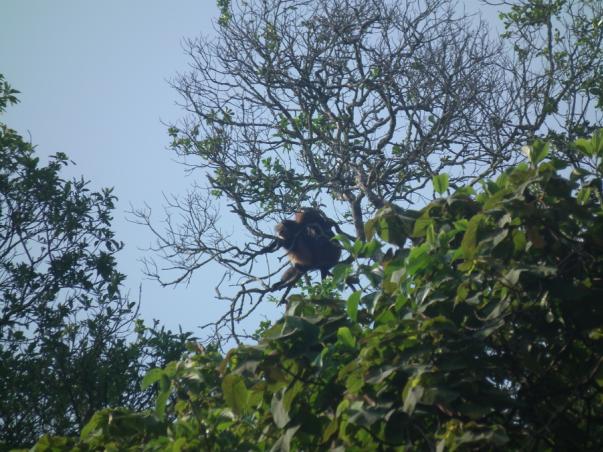
Thanks for Visting


Hello. I'm Sean and I live in Japan. I'm glad you've come because I need you to do something for me.

Help me get up to no good by reading this > Challenge Mode! <
Showing posts with label Kisoro. Show all posts

Thursday, March 3, 2011

This Post is Late... but, I saw a Leopard!


When blogging is going smoothly, and updating is consistent, the act of writing these posts can be a lot of fun, and quite relaxing. However, whenever I am actually busy enough to find myself postponed from posting, and activity and excitement is omnipresent - then blogging picks up an annoyingly frustrating quality. To be specific, the longer I go without posting, the more content I have to sift through to decide what is important of the everything that has happened. So, with much deliberation, I feel like I have made a suitable list of the essential points in regards to my goings on of the past couple weeks:

This is going to be long.

In my last post, I left you by saying that we were getting ready to have a goodbye party. However, unlike most goodbye parties, this one was to feature outfits composed of trendy buys from the Kisoro market place. Not much needs to be said. Things got messy. In a vote for best dressed, a tie was announced between Richard and Darja.

Richard, standing on a chair at one end of the table, was sporting the ensemble of a decade long past. His bright purple, sleeveless, nylon vest was glistening in the moonlight, while underneath it, just poking through the unthreaded zipper was a t-shirt that clearly said "Desert Storm, these colors don't run!" while a gaudy flag waved patriotically below.

Opposite him, posing proudly on a chair at the other end, was Darja. The best I can describe the dress she found is like a slap in the face. I'm not sure what earthly beast puked up this ribbon adorned chunk of fabric, but apparently that same beast donated it to Africa - because it was for sale at the market. The joke we made was, unfortunately for her, that it was standard Slovenian Sunday best, and she violated competition rules by bringing it from home.

After a close call, Darja won. The competition was pretty irrelevant, because everyone got equally destroyed, but an honourable mention goes out to Mike, who managed to assemble a 'classy' looking suit and touched it up with ladies plastic shoes.

After the party, and before we left Kisoro for good, we managed to clean up the last of the Ugandan Virungas. Mt. Gahinga, the smallest of the volcanoes in Mgahinga national park, was the last of the three for us to climb - and we didn't feel right to leave a job unfinished. So with much planning and hum-haing we set off early on our last day at the park to complete the set.

Gahinga lacks the sheer size of Muhavura, and the novelty and beauty of Sabinyo, yet seems to have forged its own identity that is just right. The climb up was rather nondescript, reminiscent to the beginnings of Muhavura in how it was a steep climb through bamboo forest. Our guide made us stop a bunch of times, but my least favourite among them was when he wanted to show us a hive of African honey bees. As he stopped us to see the bees, he simultaneously parked us over a nest of fire ants. About the time that people started jumping around to get the ants out of their pants, was when I got stung in the head. At least we made up some lost time as we spent the next five minutes running up the hill.

However, regardless of some of the climbs' lesser points, waiting at the top of the modest 3400m summit is a rather pleasant little swamp. It seems almost absurd to find it up there, as it is just so out of place for a mountain top, but it did allow for a string of beautiful and goofy photos before we had to start back down. This climb also marked the start of my cough.


Later that evening, we said our final goodbyes to the town and district of Kisoro and headed off in a private cab towards Kibale and Lake Bunyonyi. Thinking myself pretty smart, I managed to walk off with a pretty neat souvenir. I found out through rumour and hearsay that Ugandan flags were purchasable at the local school supply outlet, and went about getting all the staff at the the community camp and the hostel to sign it. I'm not sure why, but they all seemed so thrilled to just be allowed to participate in something so simple. They felt good, I got a really neat signed flag.

Arriving in Kibale around 9 pm, we checked into a classy little hostel called the Edirisa. The Edirisa contains a cultural museum that it claims is the purpose for the building - but as far as I can tell nobody goes to it. That evening we had a meeting with some Slovenian contact of Darjas' who had arranged to hook us up with a canoe trek around lake Bunyonyi on the following day.

My feelings about the trek are mixed. First off, the normal 90,000 Ush price tag was waved for us as we were to be guinea pigs in the planning of a new guided trek. This was good. However, I've found out in the past bit that I don't have the stomach for contrived, heavily guided 'cultural tours' that are basically human safaris. Furthermore, the title of one day canoe trek is a little misleading, as we spent less than one of the nine hours in the canoe. This meant that there was about eight hours of hiking around a lake, the day after I climbed a volcano, and with a cough that was worsening. Those are the downsides.

The tour started bright shiny, and we were to leave the hostel by no later than 8:00 am, so that we'd have lots of time to make it to the lake from Kabale for the 9 am start. Promptly at 7:15, with a menu promising faster than normal (15-20 minute) breakfast wait times, I ordered my breakfast: eggs and sausages. At exactly 8:15 am, still without breakfast, the waitress, Agnes, returned to tell me there were no sausage. I went without breakfast, hurray!

Leaving the launch site at 9:30, we headed across the bay to the landing site; and the started of our 8 hour trek over land (sans canoe). Stops included a sing song at the local nursery school (really fun), a lecture from a local healer (75% of his random bag of plants were anti-witchcraft) and finally weird lunch and craft time from a local family. Although the healer was a laugh, the crafts time was actually a bit of a hoot; but not because I did any crafts.

While everyone was trying to weave silly bracelets, I was lying off to the side in the sun, unknowingly making myself a target for pillaging by the children. As I was looking through some photos I had taken, one of the girls started reaching for my camera with her grimy hands and quickly relieved me of it.
Once that had happened, everything on my person became fair game, and my sunglasses were quickly confiscated. Then, once they learned that my sunglasses were obtainable, they went off and took EVERYONES sunglasses. I created monsters. However, the one that yoinked my camera did take some cute shots before I managed to relegate it back to proper safety.


After another quick spin in the canoe on turbid waters, and a dinner consisting of the best crayfish masala ever made, the day was under wraps, and we were taken back into Kabale. Not yet satisfied with the lake, as our introduction was under artificial pretences, Jess and I decided to head back out the next day and live it up a little bit. Using bodas, we flung our full packs over the handlebars and chugged back out to Bunyonyi in the early afternoon. The hostel we chose was a small little place called crater bay cottages. We were trying to meet up with Mike and Richard who had headed out the day previous in lou of the canoe trek, and that was the spot they told us to meet them.

Crater Bay cottages, as the name suggests, contains cottages - which were the first things that the reception staff tried to entice us with. After a price tag of 64,000 was stated, we assured them that it was in their best interest to think cheaper.

"We have tents for 15,000 a night"
"Um. Ten thousand?"
"..."
"..."
"OK."


So that is how Jessica and I ended up staying in Ugandan surplus army tents for four nights on the side of a lake. It is just a funny coincidence, as it turned out that Richard had a similar conversation the previous day that went something like this:
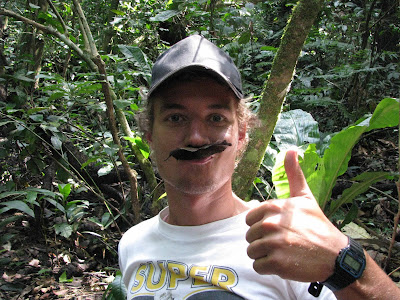
Staff: "Rooms are 15,000 a night"
Richard: "Anything cheaper?"
Staff: "You can have the discount, but you have to ask for it."
Richard: "Can I have the discount?"
Staff: "Yes, we can give you the room for 10,000"

It should be this easy everywhere.

Lake Bunyonyi is one of many freshwater lakes in Uganda, but unlike so many of the others, it is free of the ever-unfun Bilharzia worm, and is interestingly enough the deepest lake in Uganda; second deepest in Africa, and third in the world, as we were informed, measuring somewhere near 6,500 feet deep. One fun sign on the side of the changing room informed us with an extra zero and an ominous skull and cross bones that the lake was in fact 65,000 feet deep and that swimming was at our own risk; so 'pliz' be careful. This sparked many fun debates as to what may exist at the bottom of a lake that punctures the mantle of the earth.

Everything was not all fun and games though, as my cough had developed into a full blown cold by our second day in the district. I wish cold was accurate, but in reality I felt more like death warmed over. When we went for dinner the first night, I found myself mid-evening lying on the dock shivering while the others played pool. The real scary part is that when I went through the checklist of symptoms, 90% banged head on with the onset of malaria. Fearing for my well being, I did the only thing possible from a man at a resort in a region with terrible health care: I relaxed and swam and drank my heart out until the sickness had no other option than to accept defeat and realise it would not ruin my good time.

Four days and one massive night later, I was feeling a lot better. I'm pretty sure I just picked up some crazy African flu bug, and even now I still have some remanent of the cough. Amen it wasn't malaria though.

As we packed to leave the lake, we began planning for our next destination. The consensus of the group was for us to head up to Queen Elizabeth national park, and we agreed to travel to Kasese, where I am currently writing this. The problem with Kasese however, is that no guide book likes to tell you how to get here, or vaguely references it as impossible. As a result, it took a lot of asking and searching before we managed to get dropped off in the taxi park next to a minibus that we were assured was heading this way. Spoiler alert, it was.

Though there was no surprise in the trip as far as unwanted destinations go, the surprise came from the vehicle itself. These minibuses are nothing spectacular; containing four rows of seats, each with a fold down jumper seat such that approximately three riders could be on each bench, the estimated number of total passengers for a fully loaded bus is twelve. The ride was only 160 km, which should take about 3-4 hours, and if it didn't stop much, we'd get there quickly.
Reality Check: Mid ride we had an estimated twenty six people in that glorified van. The total travel time was about seven hours. We stopped for EVERYTHING.

Forget it, Kasese time! Kasese is a town that I would say is fairly typical of what I am coming to expect from East Africa: couple roads, handful of banks, power intermittently and a grocery run by an Indian man. The big difference? The big different between Kasese and every other place I've been to so far is that it borders on Queen Elizabeth national park; the first park to fit my stereotypical view of Africa as sweeping savannah plains spotted with trees and copious wildlife. It is awesome. Even as we were driving across the park to Kasese in our wheeled sardine can we almost hit an elephant! COPIOUS, CONSPICUOUS, UBIQUITOUS WILDLIFE!

No surprise then, that we were quick to head out on safari. This morning at 5:30, picked up at our hostel by a driver, we headed out into the park for our day of awesome. Five minutes down the road, in the distant glow of the head lamps, our driver claims to have seen a lion. We're ecstatic! We haven't even left the public paved road cutting through the park, and already we have lions! But then:

Driver: "Oh! No, no! Not lion! Leopard!"

Sure enough, as we drove closer, it was a clear as day leopard stalking along the side of the road. Unfortunately I was unable to take a picture due to the lighting, but car or not, I was all of ten feet from a sweet big ol' kitty. After a little bit of head light on/off cat and mouse it finally decided to take its leave of us; but the tone for the day was set. When you see leopards five minutes in, the rest is gravy.

Sure enough, the rest of our early morning safari game drive proved fruitful. We saw a herds of cobs and buffalo, scampering warthogs and a lot of lions. The highlight after the leopard was a particular male lion. His back leg was lame and he was separated from his pride, as if he had been cast out. To add to his misery, he was being harassed and chased endlessly by a single hyena, which pursued him around a bush and out of site.

After the game drive, we headed further into the park to a section of forest that reminded me exactly of the Amazon in South America. While there we managed for a reasonable price to track and ultimately find chimpanzees. Although I loved seeing the gorillas, this trek made me resent that whole ordeal (look at my blog called Gorillas! for clarification). For 1/10th the price and 1/3 the time commitment I was able to spend an hour with another of the worlds great primates. They are truly amazing beasts.

To round off the day we proceeded back towards Kasese and entered the plains area of the park near the channel between Lake George and Lake Edward. For a reasonable price, we managed to book a boat safari up and down the channel between the two lakes. It was here that we got to see the giants of the waters; hippos and crocodiles were around in an endless abundance. I never realized that hippos existed in such numbers, but my god, they are everywhere!

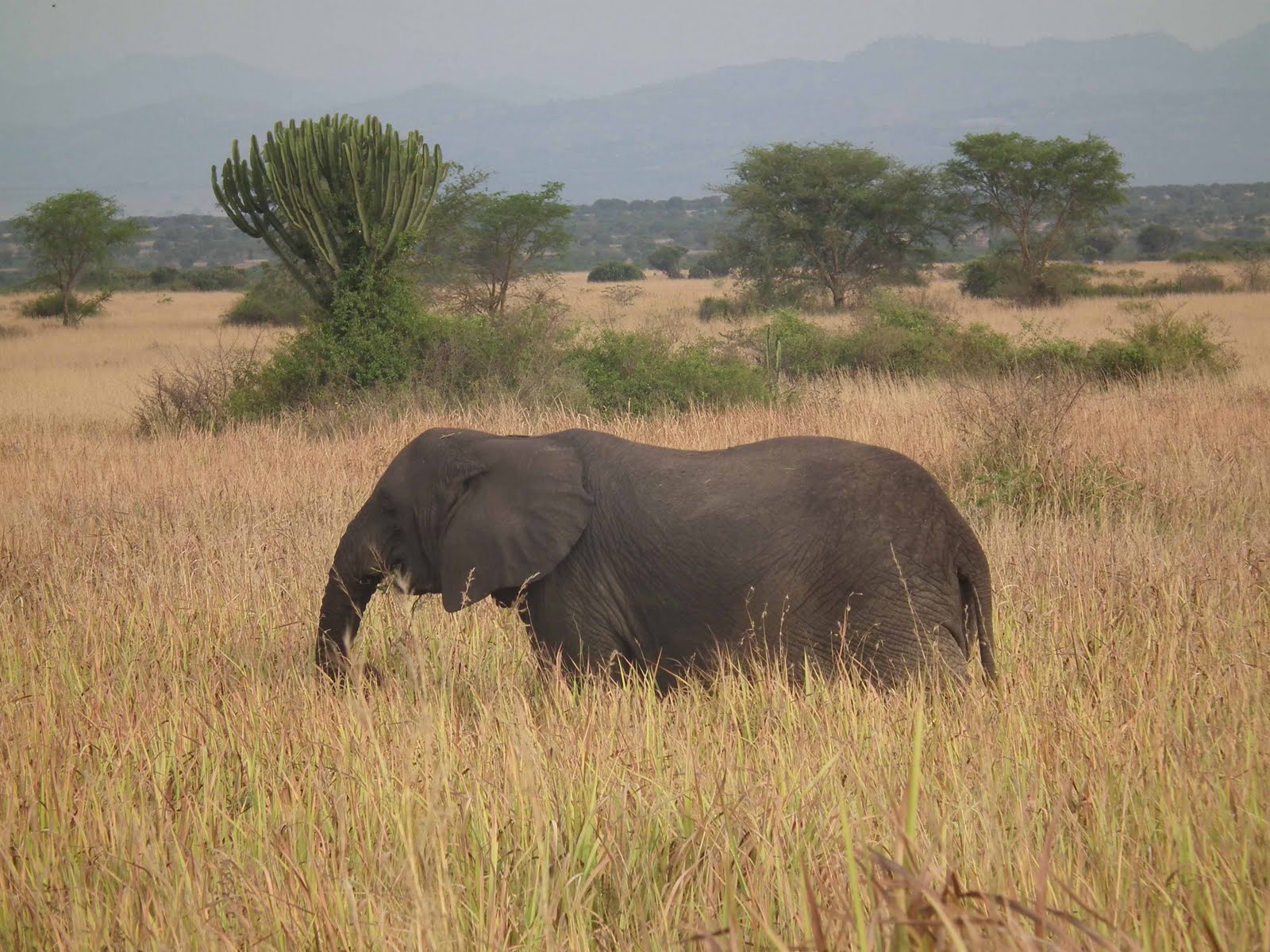
On the drive back to town we were reflecting on out days viewings, and lamenting on the fact that the only thing we really didn't see many of were elephants. We pleaded with our driver to take us to a spot with elephants, and he acquiesced to take us to the one spot he knew where they liked to go to drink. Sadly, there were none there, and we headed back to town in defeat. That was until about ten minutes later, when the driver slammed the breaks and excitedly squealed: "Elephants!". True to his word, on the side of the road, ten feet off, eating the grass, was a herd of elephants. I'll say it again, when you start with a leopard, everything else is gravy.
With the exception of a quick stop at the equatorial line, that essentially brings you entirely up to speed. The line is pretty non-descript, just a little sculpture saying "Uganda's Equator' but apparently the placement is so precise that water spinning out of a bucket will be in different directions on either side, and straight in the middle.

Heading to Fort Portal tomorrow, lets see how many we can get in the bus!

Thanks for reading,

Much Love

Sean

Saturday, February 12, 2011

Gorillas!

Since the turn of the century, modern technology has been steadily introduced into east Africa. Bank machines, cell phones, internet and even something as seemingly basic as electric power can all be listed among the advances still relatively new to certain regions of the continent. As an outsider visiting Africa for the first time, you may do as me and take all these conveniences for granted while visiting - but ask any kid or adult over the age of ten and more than likely they can tell you a tale of being without some or all of the things listed above.

Since the technology is relatively new, the assimilation of it into the every day life would be assumed slow. Furthermore the implications one draws from new technology built on an old, unreliable infrastructure is obviously apparent. You'd expect things not to work. They don't, not always, not well. Therefore the true surprise is how dependent they really have become on it. When power is out the people curse; parents would rather put money on their phones than eat and sit around listlessly when the network is down. But, in this travelers opinion, the most annoying, nay most frustrating thing about all the new technology is that nobody knows how to use it.

An example? Ask any of my traveling cohorts and they will be quick to back me up if I said lines at the bank were often long. At first we had many theories - the bank is out of money, the power is out, the machine is broken, the client base is too big - until we had to overshoot our destination of Bwindi two weeks ago, to drive another hour to Kabale and money.

Our trip to Bwindi on that faithful day, unfortunately, was not to see the Gorillas, but instead to visit a man named Edward who was researching them. Nice man, nice place, fun party. Anyways, there was a group of us and we needed a private car, which normally isn't an issue. However, during that particular week there had been a line in front of the Kisoro bank for hours every day, and we had been unable to withdraw money. The driver probably wasn't going to take us for free, regardless of how seductive Richard, Chris and I acted. Hatching a plan, the decision was made to overshoot our destination to Kabale, which has six banks, and in our minds no such problems.

As we rolled into Kabale, a dusty shanty town of a tourist hub, we were obviously fairly surprised to find that every bank had a line of at least ten people. However, the lines appeared to be moving (slowly), and we had no alternative options, so we waited semi-patiently. After about thirty minutes in line we finally got to the ATM. Thirty seconds later we were all left scratching our heads. Why had every other person taken five to ten minutes?! That is right, folks, they just don't know how to use the damn machines. Days of waiting and a two hour return trip to Kabale to find out that all our issues with money were because everyone wanted to use the technology and didn't know how - instead, putting in their cards and mashing buttons with wadded fists while a thin line of drool runs down their cheek until it spits out money.

Layer on top of this multiple incidents where the power has been out for the majority of the day, a week of no phone service, and an annoying man who asked me to set him up a website (with a picture) for his business and unquestionably we've had our struggles with the 'modern conveniences'.

I can hear you asking questions. I hear it. The question you keep asking me is "what the hell does this have to do with Gorillas? Get to the Gorillas." OK, I will get to them now - but you'll be grateful for this background.

I will indicate with a little denotation where we got lucky with technology.

You see, our expedition to the Gorillas started out rather serendipitous. As we were settling down for bed at the park on Thursday night, Jess and I were disturbed by a flurry of activity at the door. Darja and Wippollo were at our door, both with phones to their ears - one talking to Molly and one to Loy, who are employees at the Golden monkey hostel - and had news of Gorilla permits on the cheap! They also agreed to arrange for us Boda pickup very early from the park and a private car to take us to Bwindi, this time to see the Gorillas!
-> Lucky the phones were working

At five on the dot, the bodas roared up the hill to find us waiting eagerly. The ride down was relatively smooth, although we were caught in the catch-22 of night time boda driving. You see, the roads are terrible, and as a result, and especially at night, the drivers like to go slow and have lots of light. The problem of course is that the lights are directly connected to the throttle. This means you need to gun it to see and consequently hit the bumps, or go slow and careful in the pitch dark. I was oddly amused by this.
-> Good thing the Boda Boda drivers decided to be reliable

We arrived in Kisoro at ten to six and had the drivers drop as off at Stanbic bank. We were pleased to see that the lights were on, and the line non-existant. It is funny to observe us when we approach a bank in day light hours, because every local person gets in a mad rush to beat the Muzungu to the machine. They are right to do so. At just before six on a Friday morning, Jess and I managed to take just under two million shillings out of the bank. Although to us this is only several hundred dollars, it goes a lot further in Africa. I can only imagine the frustration Friday morning when people started lining up to try and use their bank cards only to find it pretty sparse on cash.
-> Power was on, bank had money, there was no line!

We arrived at the hostel just as the car was pulling in, and in no time at all were off and on our way to Bwindi and Gorillas! The ride itself took about two hours, and included a brief stop for us to actually pick up our permits. As I may not have explained, we had our names down on a list for cancellation permits. Basically a cancellation permit is a permit that is sold kind of second hand (and illegally) by a tour company when someone who has booked the Gorilla trekking through them calls off their visit. The benefits are that I only had to pay $300 for a regular $500 permit, and that money goes right into the pocket of the company. Win, win!


So at about 6:30, with the sun rising, we stopped at a crossroads in what can only be described as the middle of nowhere. After about a three minute wait, a boda pulled up beside our car and a man jumped off holding two permits. After a little negotiation and a million plus shilling transaction, Jess and I were left holding two permits made out for Americans: mine saying Alan and the other Ilona with a last name indecipherable.


Fast forward about thirty minutes to find us in line behind two french girls at the debriefing banda for Gorilla trekking, waiting to register. In one hand we had our permits with our American identities and in the other we had our passports with the names our parents chose; all we could do was stare at each other and then at our documents. When we finally reached the table, he looked at the documents briefly, comparing, then quickly glanced at us and kept on writing without saying a word. You did it Alan, you got to see your Gorillas after all!

Things really had worked out perfectly. All these tiny variables that could have gone wrong and had us up the night before in a pessimistic fret worked to a tee. We were at the park, with valid permits in hand, lined up to be the only two actually going out to see our selected group. Everything was perfect!

Que reality. To the rhythmic sound of shuffling feet, in entered the all German 70+ Bridge Club / mall walker society (I called them both interchangeably) in a whirl of beige and khaki. Button up shirts, trousers hiked to the chest and pant legs tucked neatly into the socks, arriving to set the pace for the whole trek. I must say that I am at least a little proud of them in the way they managed to turn a potentially compact five-hour trek into a nine hour mission.


Let me begin by saying that the park gets its name Bwindi Impenetrable Forest for a reason: this was not an easy hike. At it's easiest parts, you were walking through dense foliage on the edge of a pretty large drop. The angle of the path was severe and tested the strength of your ankles as it went over slippery rocks and slick grass. At first the continuous falling of the ladies was sadly humorous, but as the minutes turned to hours, it became much more frustrating.

The whole group of women was so beat up and tired, that after we made it to the apes, half of them just kind of wilted onto the vegetation and handed their camera limply to the trackers, not even bothering to take the time to view for themselves. I was fairly annoyed with them come that point, because I couldn't for the life of me figure out why they had come. Please know your limits, readers of this blog, the Gorilla trek in Bwindi is exactly that, a trek. It is not a catered safari in the back of a land cruiser - it is one hell of a walk. It is a lot of up and down hills, through very thick vegetation at an elevation of 2000 m above sea level (hence mountain Gorillas). I don't want to sound like a bigot, or an impatient ruffian but I couldn't help but feel like it was just very inconsiderate to us and the guides/porters who literally at times had to push and pull them up the hills. End Rant.

The gorillas themselves were amazing. It was simply astonishing how after the longest three hour hike of my life, how short the hour with the animals felt. We heard the animals before we could see them, and were greeted on arrival with the sounds of breaking branches and the trampling of foliage. After another minute of walking through grass, we came out into a semi-clearing where a baby gorilla was sitting alone, very cutely, eating the shoots of a plant. That was the start of the magic.

From that point on it was non-stop Gorilla action for the next hour. We saw everything! There were gorillas climbing trees, females punching the trackers and Jess even managed to get on camera a fight between the dominate silver back and a lesser one. While those two were fighting, the third silver back, who was only about 2 feet away from me was getting very agitated and making all sorts of aggressive calls and growls. "Stand still, keeping taking pictures, don't run, you're fine" was what the tracker kept repeating to us, as Jess and I (the old women had passed out somewhere further away) were encased by a triangle of three silver backs in the midst of a fight. While the males were fighting, the females and the baby were up in a tree eating fruit and then throwing them at us. So, so, so cool!


The walk back was very similar to the walk there, except without the excitement of Gorillas for motivation. Rest stops would usually include Jess and I tapping our feet for twenty minutes with the lead tracker as we waited for the rest to catch up. By this time in the day, I was pretty much dying. Since the planning had been done at 10:00 pm the night before, we had not been able to get any food, water or sleep. Therefore during the hike back I had yet to eat, had long run out of the little water I brought and was exhausted from the trekking - all the while having to wait for the ladies to catch up.

Eventually we managed to convince one tracker to take us back without the group, and I think it saved us about two hours. The hardest part of the trek is a big hill at the very end, and I'm glad I didn't have to be there for them climbing it. After finally dragging our half-dead selves to the top of the hill, and fighting off the many types of merchandise thrown at us (every t-shirt is the same gross green) we were finally back in the car and on our way to Kisoro.

After dinner and some much deserved beer we caught the pickup truck back to Mgahinga, where we promptly fell asleep and finished off one of the longest, if not coolest days ever. We walked back into Kisoro today, and after finding some liquids, basically threw ourselves into the first internet place we found. The power keeps flickering, and it's really warm, but I'm enjoying the rest.

Other than that, the only real news is that Jess and I have been teaching science at the local primary school. I've been teaching grade 6 and the classification of animals, while Jess does 5th grade and is teaching about poultry and keeping birds. I'm basically Bill Nye, you should call me that.

Thanks for reading,

Sean

Friday, January 21, 2011

Dark Continent, Light Mood (and a video!)


Monkey buisness aside, I have a confession to make. At the start of these blogs, and this trip, I ashamedly felt very much like going home. That is not the confession, the confession is that I am a person rarely satisfied with what I have. I hunger, I want; what I get is rarely ever the true means to my desire. As I sit at home, sheltered, I long for the chaotic, unruly nature that accompanies travel and adventure. Come opportunity, I embarrassingly slant my eyes home bound, drawn by the temptation of comfort, safety and stimulation; plugged into the world from my bed room, behind closed doors.

Therefore, it is understandable that I truly cherish the moments of real satisfaction. Last Sunday, on a whim, Jess decided that a walk down the road was in order. Unfortunately, this spontaneous walk was decided upon about ten minutes prior to a storm, and we found ourselves a kilometer downhill and down road come monsoon. We got wet. We got so wet that the only plausible next step was to strip to my boxers on return and parade around the grass like a mad hatter in the frozen mountain downpour. Funny enough, that was the first time on the Dark Continent that I felt at home; a crazy Muzungu losing his mind in the rain. That was the exact moment that I decided not to waste another second here longing for the creature comforts of a world away. They'll be there when I get back, but I'm here now, and I'll no longer squander the beauty of this land with a bad mood.

Understandably then, this past week up on the hill and around has been fairly good. The rainy season is moving into our little nook of Uganda, while it apparently is getting drier everywhere else. We have been told several reasons for why it is rainy here, and the closest I can figure out is that the mountains play their part. One local was convinced that the weather was unpredictable due to the closeness of the Rwanda and Congo borders. Those darn other countries are always causing that annoying unpredictability.

The vast amount of spare time we have in the afternoon is finally paying off too. Although at first is was a curse, as we struggled to fill the unstimulated hours, it has now provided us with endless opportunities to explore the community.

For example, we managed to finally get into the craft shop shop run by a local woman near the park entrance. Although it was a fairly small operation, the carvings were all quite nice, and I believe Jess and I made her day by dropping $70,000 USH on the little shop. Now if you're curious at home, that is about $35 Canadian, but over a months salary for many of the people here. The woman was literally singing and dancing as we walked out. On a small tangent, in Kisoro there is a craft store that sells similar things - the irony however, is that the nicest traditional craft store in town, but is run by a portly, industrious German woman who is always fervently working her sewing machine.

On Wednesday Darja, Jess and I set off with our field guide, Jared, to visit one of the local caves. These caves are situated around the community, buried and obstructed by farmers fields, and used to be home to the Batwa pygmies.


Now I think we just assumed rather naively that we would have no problems reaching this cave and entering, just the four of us; so we grabbed three weak flashlights and headed off for some spelunking. My gosh, how we were so wrong. As is the way with any walk through the area, we managed to amass our large following of local children; the three Muzungu messiahs and their flock of followers. Such that we arrived at the pitch dark cave with roughly twenty five children eagerly scrambling after us into the blackness. If what you are imagining is comical, then the truth was even funnier.

The majority of my time in the cave was spent shepherding children safely along with the guidance of my ever-dimming torch. Meanwhile, Darja had decided to become a movie producer and was having Jared do several takes when he went to explain things of interest, all the while directing the minimal light and our voluntary all-kid cast to do and say certain things for effect. This was all happening inside a dark, wet cave, somewhere under the surface of Uganda.

The cave itself is rather neat. As it was explained to us, the cave was the home for a tribe of Batwa Pygmies, who used to use it as a location to launch raids on the local populace. The estimates we were told were that it could have housed upwards of 10,000 pygmies. Now you've got to understand, this cave wasn't that big! So how small were these pygmies? Or, how comfortable did they get. The floor of the cave was lined with mud and bat guano, and the ever dripping ceiling meant for constant puddles - not my ideal place to sleep. I'm sure the video that Darja made will surface eventually, and I must say the true quality of it comes out in the forced awkwardness. Jared ending all his takes with "OK?", the children's inability to not look at the camera and myself, constantly with face in palm.

On Thursday we decided for a change of pace, and spent it climbing a volcano. The largest of the three volcanoes, Muhavura, that big and often misty chunk of rock in the background of our daily life here. It didn't fail to be either; big or misty. Wake up was 5:30, boda boda ride 6, sunrise 6:30, and climbing through the hole in the buffalo wall to the isolated UWA rangers station at half seven.


Mountain climbing is an enigma. The whole way to the top is a constant struggle for motivation; "I'm paying for this?". I'm not sure if I just felt a little off, but the climb was one of the hardest things I've ever done. About half way up a cloud rolled in on the wings of a severely cold wind. I didn't have a thermometer, but I lost feeling in my fingers. This new coldness was rubbed in by our guide claiming that he was sure "we were more than halfway", although I assumed we were only seconds from the top. The much needed stops for the ever thinning air offered no respite, as they heralded the arrival of massive shivering - filling the space where motion, and some reasonable level of warmth used to be.

The top of the volcano is adorned with a crater lake. The true testament to how thick the cloud cover was, is that when we reached the top, not three meters from the water, we couldn't see the pool's edge. On a good day you are supposed to be able to see all the way to Goma in the Congo, and it's a real shame we missed out. On the positive side, the crater lake is said to be lucky for those who drink from it, and so I obliged. Yes, I drank mystery water from the top of an African mountain. It is funny how, in stark contrast, the majority of the time going down was spent singing and chatting. The walk down went very smoothly, even if it felt longer than the ascent, and we reached the bottom proud, albeit a little mush in the legs. Although I had regretted paying for the torture earlier, I didn't for a second after touch down.

Today was a lazy day. Late rise, late breakfast and I talked to a crazy guy about speaking with Canada about price equality (I'll just get Canada on the phone!). Our rest stop in Kisoro has been quite good, if maybe not so restful, and I think pork is on the bill tonight followed by a visit to the lake tomorrow!

So I suppose in conclusion, things have been progressing along nicely. I am enjoying myself, and the opportunities for fun and adventure are rolling in as a result. It is truly funny that the thing that bothered me most of all at the beginning, endless amounts of free time, is now one of things I'm beginning to cherish most about this trip. One of my absolute favourite things, is sitting out on the balcony in the afternoon and waiting for the birds to come in. Sitting, reading and waiting with my camera nearby, the birds come in force for endless photo opportunities.


Thanks for reading!

Much love,

Sean

Saturday, January 15, 2011

Africa is Where the 80's Came to Die

Although Jessica may have been the one who said it, I don't disagree with the statement.

Thursday was another day spent in town, and since we weren't supposed to go back into the field until Friday, we had the chance to hang around for the much acclaimed Kisoro market day. Market day is a biweekly event where merchants stream across the border from Congo in multitudes to try and sell all their crap for higher prices in Uganda.

The market itself is located on the far edge of town, and when in full swing, becomes a maze of people selling all sorts of crap like you couldn't believe. You know all those good will donations that you are making back in North America? Well, they're selling them here to anyone with a pulse and a roaming eye for irrelevance. I eluded to the local dress code in a previous post, and in particular to the prevalence of neon windbreakers. Well it appears that as we have started cleaning the 80's clothing out of our deepest, darkest storage areas, impoverished Africans are selling them to slightly less impoverished Africans to keep the decade alive - a mere 30 years later.


Tacky bowling shirts, tees from Superbowl twenty through thirty five and fine dress apparel are handily available - one traveler even managed to get his hands on an oversize 'Mountain Search and Rescue jacket" right from the heart of the United States. When I first got here and walked through the less transitory markets, I wondered how some of this stuff got here, but this market took it to a whole other level.

Meanwhile, back in the forest... Even though Wednesday was Darja's day to go into the woods, she was sick, and as a result unable to make it. We hadn't planned to be up there as we figured she would go, and went into Kisoro Tuesday night, resulting in none of us entering the woods with the standard tracker, ranger, and field assistant. It is no surprise then that they saw no less than 39 monkeys, 10 water buffalo, a viper, a rare three horned chameleon and a full grown silver back gorilla that had come up from the Congo. Conversely, Friday morning we saw about eight monkeys in 4 hours. Ha, ha, ha.


Thursday night was a lively affair, featuring us going to a local 'restaurant' where we got some of the best pork ever. Pig around here is pretty rare and as a result there isn't a lot of game in town. There is one place however that cooks a pig a day (if they can get it), and by god they do it right. We went at about three, on our way to market, and reserved five kilos to be shared among the six of us (2 Brits, our Slovenian coworker, and a Swede along with Jess and myself). At eight, we came back for the feast. They spend the majority of the afternoon smoking the pig, and then when it is time to eat, they quickly boil then fry it. The end result is some of the best pork I've ever tasted.

Served on a large metal tray, the food is brought out among a greasy array of potatoes and cabbage and requires you dig into the plate with your hands as if it were some kind of medieval feast. When we combined this with the altitude and strong Ugandan beer, it was the precursor to a great, but messy, night. After food we headed to one of the local div-, er, clubs and rounded out our night with more beer and dancing. Unfortunately we paid for this the next morning. As we needed to get back up to the park for 7:30, our punishment was bodha bodhas at dawn.

Now my first bodha bodha ride was less than savory, and featured me getting both slapped by a local and falling off (not related incidents) - but at least that time it was downhill, I wasn't slightly hungover or awake at an ungodly hour. True to form, about ten minutes into the cold morning ride my bodha's tire got a puncture. Right? RIGHT? Unfortunately for Jessica, it meant I had to share hers and I think it may have been the worst ride of her life. She was already a wreck and I think this ride was the finisher - by the time we hit the woods she was a zombie.

After the field, and an afternoon of sorta sleeping, we actually decided to head back into town. Although this meant another ride on those hellish motorcycle taxis, it went a lot smoother. Since it was mostly down hill, and I seemed to have lucked into getting a big one, the ride was smooth and uneventful. Furthermore, I picked up this horrid pseudo-backpack that has the footy player Ronaldo on it - making the carrying of my stuff on the bike a dream.

Friday was another sloppy evening, as it was a party to say goodbye to one of the long time volunteers here. I mentioned briefly before that there was a Swede. Sam, who had been volunteering here for seven months, was helping to set up a micro loan program for local start up projects. Seven months is a long time, very impressive.

Jess and I tried to get up for the boda bodas again, but as 6:30 came and went, the idea of riding up the hill to spend 5 hours in the forest became less and less appealing. As a result I was sent out to essentially tell the taxis to bugger off (with a little cash incentive to make parting easier). I do believe that we will try again tonight to make the trip up, although I do find it rather hard to ever get enthused for bumpy, uncomfortable motor cycle torture. It is a special kind of rape, because once they're done assaulting you, they have the gall to ask for money.

Thanks for reading,

Much Love,

Sean

Wednesday, January 12, 2011

Pictures?

I realize that my blog yesterday ended with a bit of a negative tone to it. I think that my homesickness is really just the manifestation of my frustration. The 'research' that we applied for was set up to attract biologists, and required the corresponding degree and experience in the field to be considered.

Therefore, when you show up to a place and realize that you're doing the work that anyone with a notebook can manage, it is inevitably frustrating. Partly because I feel like I have been duped and partly because I could be better spending my time seeing this country or it's many neighbours. Our Solution? We've had several talks with Darja over the past day and we've decided that our concerns should be expressed. Either this program needs to evolve to offer what it promises at a distance, or it should be targeted to everyone until such a time as they wish to make it more specialized.

I may have still come if there was simply a volunteer position to 'habituate and observe primates for two weeks', but don't offer me cake and give me crumbs. It's only been a week and I will give it more time, it is just really sad that such a valuable opportunity to do something real and novel is being squandered. Those are my qualms, maybe when voiced some changes will be made - as I have eluded to before, we are pretty much in on the ground floor, and I think our suggestions and even outward cynicism will be necessary to help this project advance to its full potential. This trip, and volunteer position, has been in my mind since I got accepted back in the summer - so I hope that it is understandable that I am a little disappointed.

Let me tell you the positives. Even the job of habituating these monkeys for tourism is important for tourism and adding money to the community. Win. Uganda is truly a beautiful country, and with the odd exception of course, the people are very friendly. Win. The staff and members of the other branches of the MCDO umbrella organization are all very friendly and helpful, and a pleasure to be around and talk to. Win. I already feel better after a couple days in Kisoro, and am in a much more positive mood.

Now as promised, pictures:


The golden monkey guest house is the headquarters for MCDO in Kisoro and is a great place to stay with very friendly staff. I believe the man in front identified himself as Saturday. I am not sure and even had to ask twice.

An example of the sort of hodge-podge nature of the clothing exhibited. These kids and their flashy suits just happened to pose in a way that looked like a Christian rock album cover.

The gate house to Mgahinga National Park. There are gorillas in there we're told, but we're trying to count on stumbling across them - instead of paying the $500 cover to anyone else.

Mt. Muhabura, the tallest of the three Virungas, stands as the constant backdrop of daily life in the park. Aptly named 'the guide' it can be seen for miles.


The pictures beneath are kind of an overview of the forest, and the pictures really don't do its magnificence justice. The first is a picture of the very high forest canopy, and the second of the thick bamboo that makes for the thickest parts of the woods. After that is an obligatory picture of the monkeys so that you know I'm really looking at them - and last but not least is a picture of our ranger, Ben, resting in a clearing. The low resolution of the photo doesn't really do it justice, but it is my favourite picture from here to date.


Tuesday, January 11, 2011

Mountains on the Horizon


The majority of our Saturday morning was spent in Kisoro - finally succumbing to the full extent of our jet lag, Jess and I found ourselves passed out well into the afternoon. Breakfast was had shortly after our eyes cleared and was a simple meal of a fried egg and toast. Interestingly enough, bread in Uganda is sweet, and made with sugar instead of salt. You may not think this would be weird, but it can really throw you off when you're not expecting it. Although personally I don't find it that bad, a few of the other tourists at the hostel were quick to point it out as the worst thing of note; recommending a local bakery that makes specialty salt bread.

Post breakfast activities were primarily confined to getting ready for our stay up in the national park. Since the park has no running water, we had to send someone to pick us up two boxes of water bottles. Twelve, 1.5 L bottles of water in a box for 3000 Ugandan shillings. For those who don't know the conversion, it is about a dollar-fifty. As we were practically heading out the door we ran into our research cohort, a Slovenian named Darja (Dar-ee-ah), who was just heading the other way into town. She warned us that it would be cold and that we'd have a lot of time to ourselves - she was right on both accounts. She promised us that she would be up Monday afternoon and no showed. I saw her a few hours ago at the hostel though - unfortunately she has come down with something and looked to be in rough shape.

The ride up to the park featured a cramming of us into the front of a beaten up pickup truck while it carefully traversed the wrongly accused 'road' up to the park. The road itself is uneven and worn, with huge patches of dirt eroded due to flooding in the wet seasons. The true miracle of the day was that the truck didn't disintegrate before we reached the top. The park and its buildings are very closely linked with the surrounding community, and as a result the trip brought us through the centers of a handful of local villages. Many of the locals are sustenance farmers. As a result it is sometimes funny, and maybe a little mean, to take the time to observe the local apparel - which seems to feature what ever they can get their hands on. Kids in suits, men in sweet 80's styles windbreakers and I even stumbled across someone selling an L.A. Kings backpack in the marketplace - I kid you not.

We reached the place after a forty minute drive (for 14 km!), just as the sun was starting to set. As a result, the unpacking in our powerless banda was done in the company of candle light. The bandas are concrete huts and as a result tend to trap in the cold air - much to our displeasure. You see, since Uganda is just north of the Equator, it happens to be winter right now (Darja wouldn't lie to us). This means that at an elevation of over 2000 m things get a little cold. We were just starting to feel this as the sun was going down. To be positive though, the air in the grounds smells like sweet flowers always, and the many birds begin chirping happily at first light. It gets dark at night though, pitch black. The mountains seem to attract an entourage of fairly constant clouds to the area, such that with the moon and stars covered there is absolutely no light.

Sunday was spent exploring and getting a feel for the area. We had lunch with the local rangers for the Uganda Wildlife Authority (a weird affair consisting of odd corn bread, potatoes, beans and something they affectionately referred to as 'paste') who were all very friendly, and took the time to explain the names of the mountains. As you may have guess, the Virunga Volcano national parks of Rwanda, Congo and Uganda actually contain volcanoes. Three in fact, that loom ever omnipresent over the back drop of the for lying forest. Mt. Muhabura, an oft mist covered monolith, is the biggest and translates locally as 'the guide'. This volcano stands as a beacon in the sky, allowing its use as a compass for many miles. The second tallest, Mt. Sabyinyo is named accurately for its shape. This multi peaked mountain literally means 'old mans teeth' as it has three jutting peaks, and several deep gorges. Wedged between the two, is the comparatively smaller Mt. Gahinga. Gahinga is a word used to describe the piles of volcanic stones that are created when the local farmers take them out of their fields.

Monday was the first chance that we had to enter the forest to view the monkeys, and they nor the forest disappointed. There are two zones to the forest, the first being the woods proper, and the other being an outlying area of scrub brush that is recovering farmland - as the community was evicted from the park back in 91. I can say that it was a truly unique experience that not ten minutes into the outlying zone we came across the foot prints of elephants, gigantic in size, that were only from the night before. Also evident was the many prints and droppings of the water buffalo - the presence to which the armed guard in our entourage would attest. Truly walking in the foot steps of giants.

The forest itself is stunning, one of the great African jungles. The jungle is a mix of traditional tree cover, but also includes sections of very dense bamboo where quarters are tight and imposing. When we first entered the bamboo a mist was creeping its way silently across the upper canopy to create that truly time lost feel. The monkeys themselves were quick to arrive on the scene and we spent hours on Monday morning watching them. Our target group is composed of about sixty members, featuring a dominant male, a few subordinate males and the rest females and juveniles. The animals are beautiful, and were fun to watch.

The extent of the research unfortunately is rather basic. Although I realize that part of the aim is to just habituate the monkeys, the best I can describe what we are doing is research by consensus. We spend hours watching the animals and then have a meeting back at camp to consolidate the day after. However, there is very little novelty and ingenuity - we're not testing hypothesis, merely writing behavior on a sheet day after day over the same time period. The general hope right now is that perhaps when the head research gets back in the next week and a bit we will have a little more freedom. The expeditions are led by a local field guide who although knowledgeable about this forest, seems timid and unwilling to waver from the guidelines that were undoubtedly set for him. I had the chance to talk to him and I found out he is a local man who went to school for arts in Kisoro, and I assume very happy to have such a position - and I don't want to jeopardize that.

I had been having trouble sleeping up until last night. Perhaps, considering I still woke up at 5:30 local time this morning, I'm not out of the woods yet. It has been a collaboration of a bunch of factors, the primary one being that it can be hard to go to bed at nine knowing that it is really only one in the afternoon at home. More so though, I think I have just been having problems shutting my brain off when it comes time for bed. I'm not sure how to feel, as much to my surprise I have found myself quite homesick over these past few days - or possibly sick for anywhere but here.

This is truly the strangest place/thing I've ever done. If the volunteering doesn't change it is possible that we might get our fill after 2 months and spend March a little more mobile - South Africa?

We'll talk. I'm getting kicked out of this internet cafe as it is closing!

Thanks for reading,

Much Love,

Sean

Friday, January 7, 2011

Airplanes, Rwanda, Uganda

Airports are weird places. They exist as large buildings full of people in transit, such that no one in an airport is ever exactly where they want to be. Those arriving from travel abroad are still a ways from home, those working wish their shift over - and those about to depart haven't a clue what they're in for. Therefore everyone in these locations are connected by a common displacement. With this is mind, you can understand that upon arriving to Kigali, Rwanda after twenty-one hours of travel, the last place we wanted to be was facing down customs and immigrations officials - being informed that we required a visa issue at home to enter.

As we came to understand, the visa regulations for Rwanda had been changed as of November in regards to Canadians. Now apparently Rwandan officials did not rush to get the word out, as our guide book and official sites still said that Canadians could receive them at the border or airport. As a result, we found our selves as the last people in front of customs at 9pm local time being told that the place we should go is 'back where we came from'. Not an option. Luckily, Jessica and I happen to be very lovable, and we adopted our most exacerbated and near-tear faces we could muster (part act, part pure exhaustion and frustration) and managed to guilt the guy into letting us into the country. I would meet a woman from Ottawa later that night who had had the same problem a week earlier - but had known the number of a local to pull some strings.

We were picked up at the airport by a young local named Jack, who I can only ballpark to be around my age. He was friendly and spoke considerable English despite telling us he was terrible at it. Rwanda, like many African countries, is predominantly French speaking. Such that sometimes exchanges between myself and the locals were confined to both of us trying to explain what we wanted in parsed English/French semi-speak. The biggest problem I had was that I actually instinctively kept falling back to Spanish when spoken to in French. Bad habit I suppose?

The hostel was nice and clean, and occupied by six students from Columbia University in New York. Talking among them was a man from Burkina Faso, a country in west Africa, that ensured me that when I come out to his country I would and must stay at his house with him and his wife and daughters. I didn't have the heart to tell him that chances were slim of me making it out there, not that I could have articulated it anyways - as he was another French speaking African.

We were picked up at our hostel (the Chez Rose) this morning at around nine o'clock and began the twisty drive to the Ugandan border. Kigali is a rather breath taking city. It's core is built in the valley between and extending up the sides of two great hills. As you wind your way around the different levels of the city, your gaze is drawn to the city limits which provide a vista of endless mist-capped mountains and terrace farms over rolling hills. The closest cities I can equate it to is a mix of Quito and La Paz, the way it is built at elevation into the sides of hills.

Outside of Kigali proper, urbanization is relatively non-existant. Farms and houses seem to melt into each other as well as the surronding landscape, with the one large paved road of Rwanda acting as the spine of the country. This road is also similar to Bolivia in a way such that the further from the capital you were, the worse it could be. Non-stop lines of people walked the shoulder of the road, and even in the most empty looking of areas there would be locals traversing the shoulders with various things being carried on their head. The diversity was amazing - people in suits, rags and everything inbetween carrying the crops from their fields. There was even one unfortunate boy who had no legs that was shuffling himself along on his palms...

The ride to the Ugandan border took about an hour and a half, with the first real town we came to being Rungheri, a mere 25 km from the border. The road is by no means straight, and twisted and turned up and down the spines and ridges of the rolling hills. The driver, like so many others in developing countries took the road at a pretty good clip - the difference being that for whatever reason, his car had the drivers seat on the wrong side - such that sometimes as he went to pass, the impomptu English/French silence would be loudly interrupted by meing say "NO, NO, NO!" as he thrust me, and my shotgun seat over the center lane into the path of an oncoming truck.

Border crossing was non-eventful, and we were greatful for it. Knowing that we would not be able to get back into Rwanda once we emigrated, we prayed very hard that nothing would cause an impasse on the Ugandan side. From there, we were retrieved and brought to Kisoro by one of the organization workers named Edison. Our arrival was punctuated quite enjoyably by reggaeton over the car's speakers, and a whispering of Muzungu by the people that saw Jess and me through the open window. It literally means white person.

The day in Kisoro has been fairly eventful, we checked into the Golden Monkey guest house and then set off with Edison to see the town after a brief nap. We managed to find a bank and some rubber boots for the Jungle. The poverty here is at a level I've never experienced, and it can really take you aback if you're not prepared for it. However, the people at the guest house, the organization and the town in general have all be very kind and friendly. It is about 10:50 local time, and we only had dinner about an hour ago - vegetarian chilli, very good! I think however that I will wrap this up and try to get some rest.

Tomorrow we head up to the National Park in the early afternoon, and I really have no idea what to expect!

Hope you all are well,

Much love, take care

Sean