
The night before we went to Zanzibar was spent trying to find an English pub in Dar Es Salaam. We had heard rumour through some means or another that this pub had the best fish and chips going; Arsenal also happened to be playing that night and we wanted to watch Premier football in an establishment that payed proper tribute to the leagues nationality. The only problem we faced was that we didn't know the name of the place. Small problem, right?
Somehow through vague hearsay from locals we got the notion in our head that the place was called the slip away Pub. Now the slip away itself in Dar is some fancy hotel on the harbour front, surrounded by a gaggle of choice stores; essentialy a strip mall on the waterfront. Knowing this, we were fairly confident that a pub could be hiding within the confines of the shopping area. That was the beginning of a very long and fruitless search, with everyone we asked pointing us in a different direction fifteen minutes walk away. With much frustration then, we finally ended up in a local place called the Q-bar, with the game thirty minutes old, and my want for a beer peaking.
The beer flowed. After the game (a disappointing draw from Arsenal) the sports bar miraculously shifted into a dance floor that had a live DJ and every song you've ever attempted at karaoke available for requests. No surprise then, we arrived back at our hostel late and rather intoxicated, and again no surprise that we walked to the port and boarded a two hour ferry journey in rather rough shape. It was the 'fast ferry' that we got on, but I still don't think it was quick enough for any of our likings. The Ferry, like every thing in Africa, would not be efficient if the management didn't take the opportunity to cram it full, well past the number of seats. Therefore, we spent the next two hour journey on the back deck by the engines, inhaling the fumes, feeling the pitch of the waves and keeping our eyes closed and breathing slow.
Landfall was sweet relief, and opting for the closest place, we made for the Bandari guest house - only three minutes walk from the harbour. Fun fact, Zanzibar has it's own immigration and you get another stamp in your passport for landing on the island; thankfully they didn't take the opportunity to charge you for another visa or something - although I'm surprised they don't. Bandari is a quaint little hostel, that much like all Zanzibar is a touch on the pricey side, with large rooms and complimentary breakfast. Luckily for us, they were willing to haggle the price down, but unluckily for us, across the road from our windows sat the local garbage container, full of trash and rotting fish, which always wafted in a nice smell when the breeze came from the ocean.
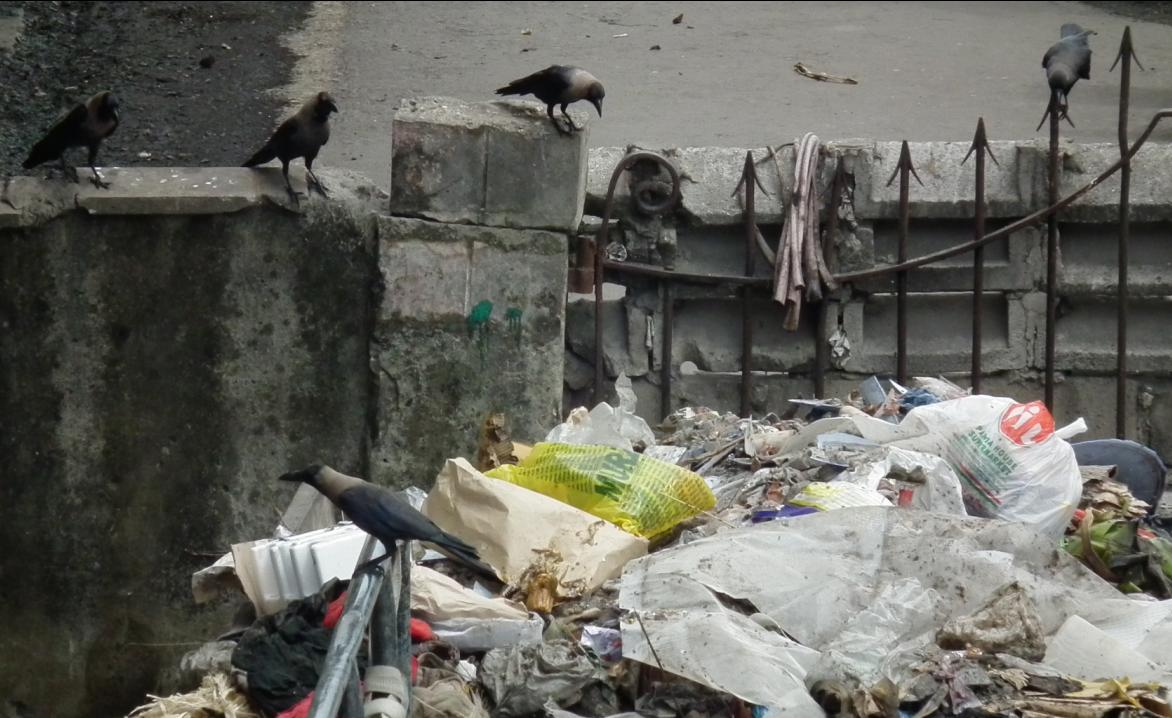
The shining gem of Bandari however was the TV for the guests to use, which was located just outside our room in the common area. Now I realize TV isn't much to get excited about, but aside from football in bars, I hadn't watched a thing since the first week of January. The three of us proceeded to sit in front of it well into the night, while watching such trash as top chef and wipe out. Brilliant programming!
The island itself is beautiful, and was a pleasure to explore. Zanzibar town is interesting, as it contains the widely known attraction of stone town which is then surrounded by a more sprawling and modern city. Stone town was a flashback to Lamu, with its close streets and maze like layout. It is missing the donkeys though, and instead has people on scooters and motorcycles zipping around the tight quarters.

Where Lamu has the advantage though, is with the street hawkers. The people trying to sell things near the ocean side in Zanzibar are so persistent and annoying that even if they had something you wanted you'd be inclined not to buy, just because they're too pushy. There is a fine line, and they all cross it. I had the same problem last night when I returned from safari and a guy I had never met was trying to get me to come to his hostel. If you spend six minutes pestering me after I just got out of a vehicle, gross from four days of tenting and dusty roads, I'm not going to cooperate with you, not a chance. And no, Zanzibar salesman, I don't need a scarf in forty degree weather, no it doesn't make it better if you give me three for ten, that just makes me warmer, no chasing me won't help. Know your target market!
Night time by the ocean is also very cool. In my last post I showed you pictures of the locals coming to jump into the waters at sunset. While this is going on, the local fisherman from the island congregate just down the coast and set up the nightly fish market. Every night all the fishermen set up grills and tables to cook up fresh all their catch from the day which they then sell to me, the tourist, at a marked up price. It is delicious. They have all sorts of skewers and chunks of who knows what sea creature, which they let you select and then take to the grill and cook in front of you. This was the first time I tried octopus, and it was actually pretty good.

From Zanzibar town we decided to head up the coast to the north of the island: Kendwa Beach. We decided to get there using public transportation, and with all our bags, climbed into the back of a dalladalla along with eighteen other people. The dalladallas are basically flatbed trucks with two rows of seats, open sides and a roof over top. Unfortunately for us it started to rain just minutes into our ride, and the powers that be lowered tarps down the sides, making the inside very dark and stuffy. I don't usually get motion sickness, but something about being in a closed space with the smell of eighteen locals and no air flow set my stomach off. Thankfully I didn't puke, and we managed to go about an hour and a half for 2000 shillings (roughly a $1.30). We later heard that people had taxied to Kendwa for as much as $40 American, suckers.
The main place to stay on the beach is a resort called Kendwa rocks, which fortunately also contains backpacker priced lodgings. This resort provided the building block for all the other resorts and the small town to crop up around. It was again fortunate for us that this happened, as food and drink was mind boggling pricey at our lodgings and we were able to wander just up the road for a more wallet friendly alternative. Aside from that, the resort contain a beautiful white sand beach, and the ocean was also a much nicer temperature than the soup near Zanzibar town.
After two nights we returned to ZT and decided to head back to Dar and move inland. The coast of Africa is beautiful, but it is over the top hot and the air is always about 100,000% humidity. Even if you're showering you're sweating, and life out from under the room fans is no fun. From Dar we decided to head to Arusha, the safari capital, and left early to the bus station to head out.
The ride from Dar to Arusha is a long one, and took us about ten hours all in. We arrived in the mid-evening and got off the bus tired and gross only to be assaulted by a horde of taxi drivers and safari totes. Much to their surprise, they couldn't understand why I was less than friendly while they were hounding me and pulling on me as I tried to get my bag out from under the coach. Jess, thankfully, had taken the time to map out where we would stay and it was a short walked from the station - we still managed to get no less than five cards from five people for the same safari company along the way though.
The next day we set out to find a well priced safari, and eventually made our way to no other than the place mentioned on the millions of cards we had been given the night before: meru treks. After surprisingly little debate, we had agreed to head out the very next day on a four day safari, which included Lake Manyara, Ngorongoro crater and Serengeti national parks.
We left early morning the next day and arrived out our campsite on a ridge overlooking lake Manyara just after noon. After dropping off the cook and the gear, we headed down towards the lake's national park, with cameras in hand and spirits high. The park by the lake was beautiful, and we managed to see all sorts of crazy African beasts, including many giraffes (possibly one of the strangest things going).

There was a spot by the lake where you could get out of the vehicle (at your own risk) and walk around near the hippo pond. It was a surreal field being on foot in an African park, as even though it seemed quiet enough, you couldn't help but wonder what was lurking around the next bush.

The next morning it was time to head into Ngorogoro crater, which in my opinion is one of the most beautiful places on this planet. The crater is a conservation area and not a park, and as a result the local Masai people are allowed to enter and graze cattle on the one side of the crater. As you can imagine, it was quite the site as you descended to see zebras, wildebeest and a man herding cattle all in the same field of view.

At the center of the crater was a giant lake, and as you descended, the mountains rolled up on all sides in breathtaking fashion, until all you could see was rolling plains spotted with large herds of animals and back dropped by green peaks.


We spent close to five hours in the crater, and in that time I managed to see the last one of the animals needed to complete the big five. The big five in Africa includes the leopard, lions, elephants, buffalo and the rarest of all rhinos. I was able to see all of those except the last during my safari in Uganda. Much to my pleasure then, at a fair distance, we had the luck to see two rhinos grazing!

Later in the day, as we were about to ascend from the crater and head to the nearby campsite, we made a quick stop at the only bathroom in the whole area. The bathroom is located in the only wooded area of the park, and featured black faced vervet monkeys jumping and playing as you walked into the facilities. As we were heading back to the land cruiser, our driver was looking very anxious and waved at us to "get in the car, quickly!". As we got in, he pointed down the road towards a lone bull elephant that was making its way up the lane towards us.
Turning on the vehicle, our driver took us over to the side of the clearing away from the elephant. The elephant instantly turned and again started walking towards us. Coming close, again our driver started the vehicle and tried to maneuver around the far side of the giant beast. That is when it charged! Hitting the gas and shifting like a madman, the vehicle just lurched out of the way as the giant animal came withing feet of charging the back end of the vehicle. We rocketed down the road in disbelief as the elephant gave a few meters of intense chase and with a trumpet of defeat, turned back. It was one of the most scary and awesome things I've ever seen.
That night we camped on a flat area located on the rim of the crater. The conservation area sprawled out underneath us as we had dinner and went to our tents to retire for the night. In the early morning was when I first could hear the hyenas. From what sounded like the edge of the campground, you could hear them communicating with each other in brief yelps. We're told they come for the leftover food, but I'm just glad they didn't decided to test the durability of the nylon tents.
The following day we headed to the Serengeti for the last two days of our safari. The Serengeti is also gorgeous, but in a much different way then the crater. The endless plains of grass seem to sweep off endlessly in all directions like a green ocean that you can't see the end of. Spotting the terrain is rocky outcroppings and lone Acacia trees that provide a change from the overwhelming vastness of the gigantic grasslands.
On our way towards our campsite we got very lucky. Seeing two land cruiser parked a ways away, our driver turned on his radio to find out what they were looking at. As we got closer, we got a very good look. Sitting in a tree, munching on something very much dead, was a leopard. Circling fifteen feet below him, waiting for the scraps, was a single hyena! Although the cars started rolling in after us, we had about ten minutes of really good viewing before the area was packed with cars and the leopard decided he was done. It is rare to just see them, let alone have them sit there eating in front of you! So cool.

One of the more inconspicuous animals on the Serengeti in terms of looks is the Cokes Hartebeest. However, with a name like that, I refused to believe that they were not being sponsored from the world power Coca-Cola. Therefore I decided to take the time to make this advertisement, and perhaps Coke will decide to reimburse me at a later date:

That night we stayed at a campsite located among a copse of trees. Much like the restroom station in Ngorongoro, the area was spotted with monkeys, and baboons coming in an out of the grounds was not uncommon. We even had the chance to see one of them turn on the facet and start drinking! However, I guess it had never heard of conserving water, because I was the one who had to walk over and turn off the water when he had finished. Just after night fall is when the lions first started calling out in the distance, and we went to bed with the sounds of the wild thick in the air.
Our last game drive was the following morning, and was no less amazing than any of the others. In the cool morning air, the sun was rising as we made our way around the park before breakfast. We managed to see another glimpse of a leopard, thousands of buffalo, packs of hyena and even a group of a hundred or so wildebeest running past - which we were informed was part of the great migration that is just beginning.
After breakfast we packed up and prepared to head back to Arusha. However, before we were free and clear of the park, we saw the one animal that I had wanted to see the most: cheetahs! As we were approaching the main gate out of the park, two male cheetahs were lazily strolling along the road, and did not seem at all concerned when we pulled up next to them. You can never take a bad cheetah photo, and I think I took too many. Such beautiful creatures, and definitely my favourite as a kid.

The rest of the trip was uneventful, and upon returning we were given free lodgings in maybe the nicest rooms I've stayed in in Africa. Unfortunately, apart from the free night, they were too pricey for our blood and we moved out this morning. Looks like Moshi is tomorrow, and with it a view of mount Kilimanjaro.
Sorry for the length,
Thanks for reading,
Sean


